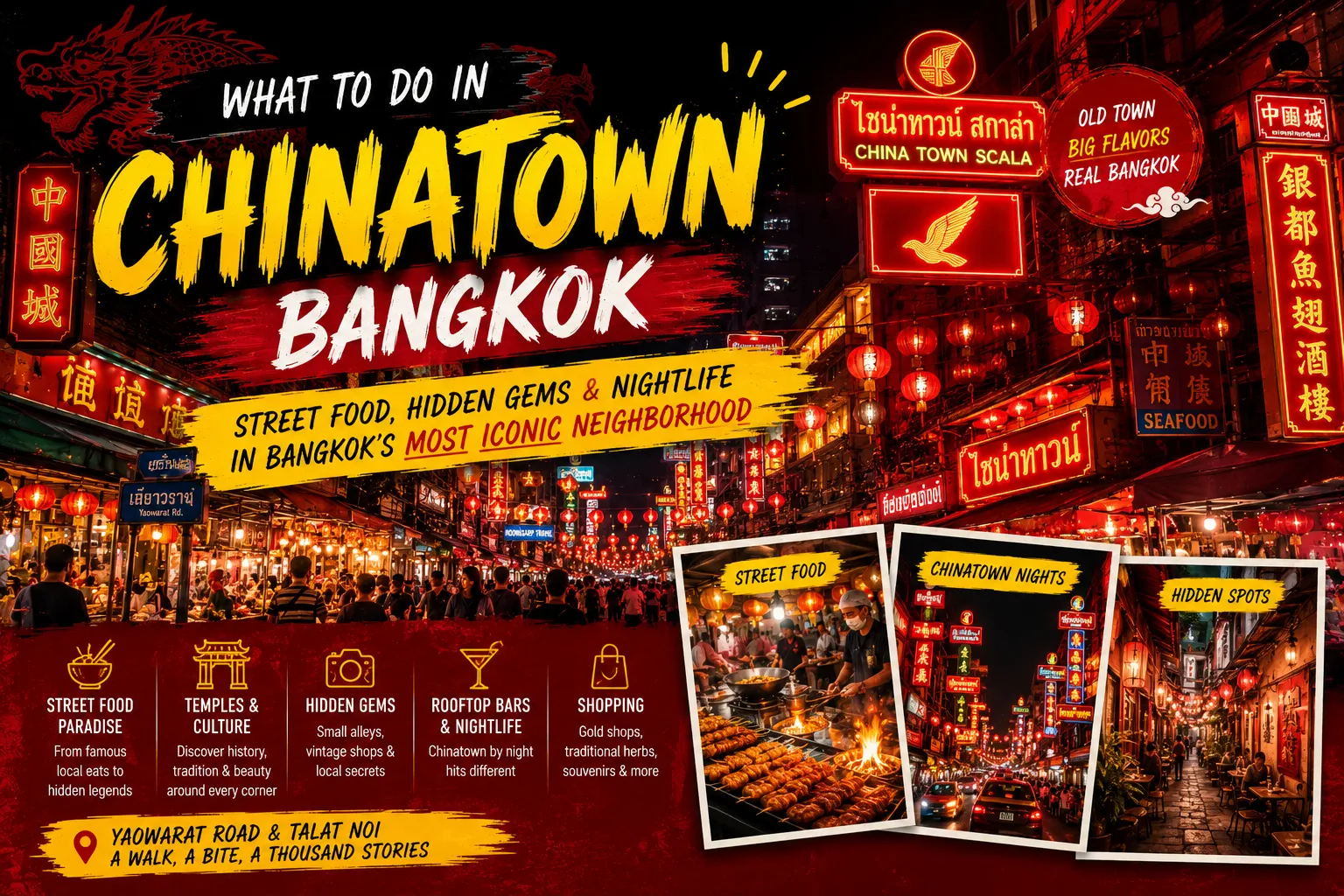
Yaowarat — Bangkok's Chinatown — is the loudest, smokiest, most concentrated burst of street energy the city offers. By day it's a market neighbourhood with century-old temples and shophouses. By night it's a kilometre-long open-air food court with neon signage and people shoulder to shoulder. Few neighbourhoods on earth pull this off without becoming a theme park.
Here's what's actually worth your time around Yaowarat Road, Charoenkrung, and the lanes that branch off them.
Eat: The Yaowarat Street Food Run
Yaowarat after sundown is the reason most visitors come. The main road becomes a corridor of stalls, plastic stools on the pavement, and queue-up-or-leave restaurants. Here's how to do it without wasting your appetite.
T&K Seafood (Khueang Nakhon)
The famous one with the green tablecloths. Grilled prawns, curry crab, fire-cooked everything. Expect a queue, expect to eat on the street, expect it to be worth it. Find on Maps.
Nai Mong Hoi Tod
Oyster omelette specialist on Phadungdao. Often considered the best version in Bangkok. Tiny shop, queue down the soi, worth it.
Texas Suki / Yaowarat Toasted Bread
Suki here doesn't mean Japanese sukiyaki — it's Thai-Chinese hot pot. Bizarre and worth trying. Across the road, the famous Yaowarat toasted-bread stall sells custard-filled toast that lines have formed for since the 1970s.
Charoenkrung backstreets
Older, slightly quieter, with proper restaurants in shophouses. Mark Wiens' Migrationology blog has long covered the Chinatown food scene in depth — useful for a deeper list than the headline streets.
Drink: Yaowarat's Bar Scene Is Better Than People Think
Most visitors don't realise Chinatown has one of Bangkok's best bar scenes — specifically the wave of "speakeasy" cocktail bars hidden behind unmarked doors and above shophouses.
- Tep Bar — Thai-music-inspired listening bar with live performances. Atmospheric, neighbourhood-feel, walkable from Wat Mangkon MRT.
- Ba Hao — Chinese-themed cocktail bar, multi-level, the Chinatown speakeasy that put the neighbourhood on the bar map.
- Teens of Thailand — gin-focused craft cocktails, small, mood-lit.
- Tropic City — tiki bar, fun rather than serious, useful for groups.
Time Out Bangkok's bar coverage includes most of these regularly. The wider Chinatown bar scene rewards walking — half the appeal is finding an unmarked door.
See: Temples and the Old City
Wat Mangkon Kamalawat
The most important Chinese Buddhist temple in Bangkok. Free, open daily, atmospheric incense interior. Walking distance from MRT Wat Mangkon. Background on Wikipedia.
Wat Traimit (Golden Buddha)
Home of the famous solid-gold Buddha statue — five and a half tonnes of it. Small entry fee. One of the must-sees if you've never been. Wikipedia background.
Talat Noi
The neighbourhood directly south of Yaowarat — older, quieter, full of vintage car parts shops, street art, and the kind of half-abandoned charm that gets photographed a lot. Walking tour material. The Bangkok Post and Time Out have both covered Talat Noi as a self-contained half-day walking route.
Lhong 1919
Restored Chinese heritage building on the river, free entry, traditional shrines + cafes + small shops. Cross the river by ferry for the full effect.
Walk and Explore: The River Side
Yaowarat backs onto the Chao Phraya River. From the Talat Noi side, a short walk gets you to Marine Department Pier, where ferries run up to ICONSIAM (15 minutes), Tha Tien (Wat Pho), and Sathorn Pier. The river is the most pleasant way to move between districts here — beats traffic by a wide margin.
Chinatown branch closure
Stash BKK Chinatown permanently closed on 1 September 2026, after its final trading day on 31 August. The three current Stash BKK locations are On Nut, Ari and Ekkamai; all are open 24 hours. Current addresses and directions.
Getting Around
MRT Wat Mangkon (Blue Line) is the nearest metro stop and the easiest entry point. From there, the entire Yaowarat strip is walkable. MRT Hua Lamphong (next stop) is also workable — slightly further but useful if you're coming from the Sukhumvit corridor via the Blue Line.
The neighbourhood is dense and slow to drive through. Walking + the river ferry is genuinely the right combination here. Grab cars work but expect traffic any time of day. Grab bikes are fastest for short hops.
Also Worth Exploring
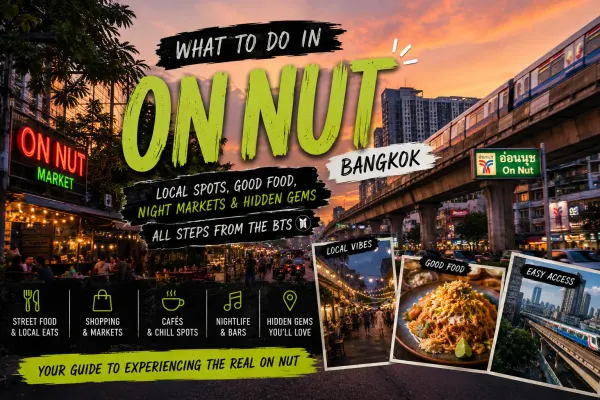
- On Nut — quiet Sukhumvit residential, late-night markets, expat scene.
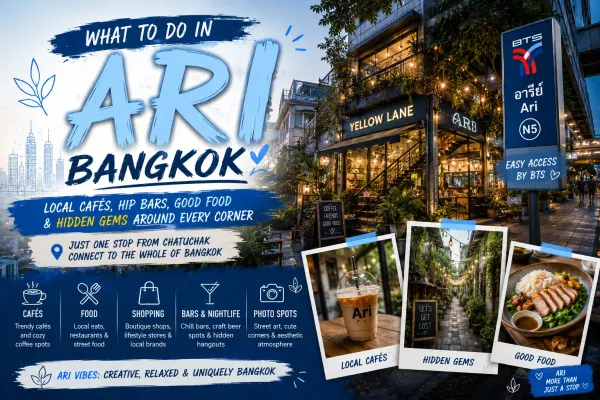
- Ari — northside specialty coffee + jazz bars.
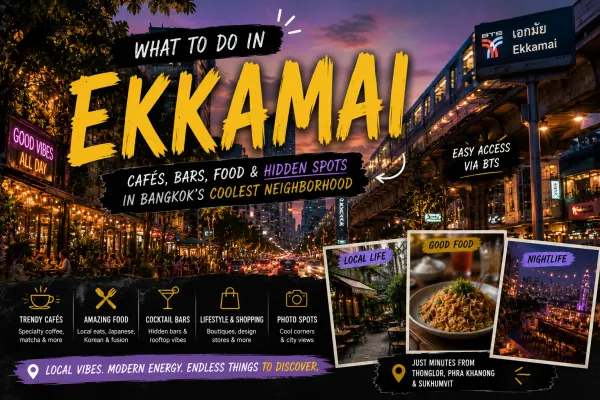
- Ekkamai — design-forward Sukhumvit lifestyle district.
FAQ
When is the best time to visit Chinatown Bangkok?
Evenings after 6pm for the full street-food experience. Weeknight evenings are slightly less packed than weekends. Sunday mornings are good for temples and walking before the food crowd builds.
Is Yaowarat safe at night?
Yes. Crowded, well-lit, lots of foot traffic. Standard urban awareness applies but no specific concerns.
How do I get to Chinatown by BTS?
You don't — Chinatown is on the MRT Blue Line, not the BTS. Take MRT to Wat Mangkon (or Hua Lamphong). If you're starting from the Sukhumvit BTS line, transfer at MRT Sukhumvit / BTS Asoke or BTS Silom / MRT Si Lom.
Can I do Chinatown as a half-day trip?
Yes. A common pattern: arrive 5pm, walk Talat Noi while it's still light, dinner on Yaowarat, drinks at a Chinatown cocktail bar, leave by 11pm–midnight. Tight but doable.
Are there cannabis dispensaries in Chinatown?
The three current Stash BKK locations are On Nut, Ari and Ekkamai; all are open 24 hours. Current addresses and directions.