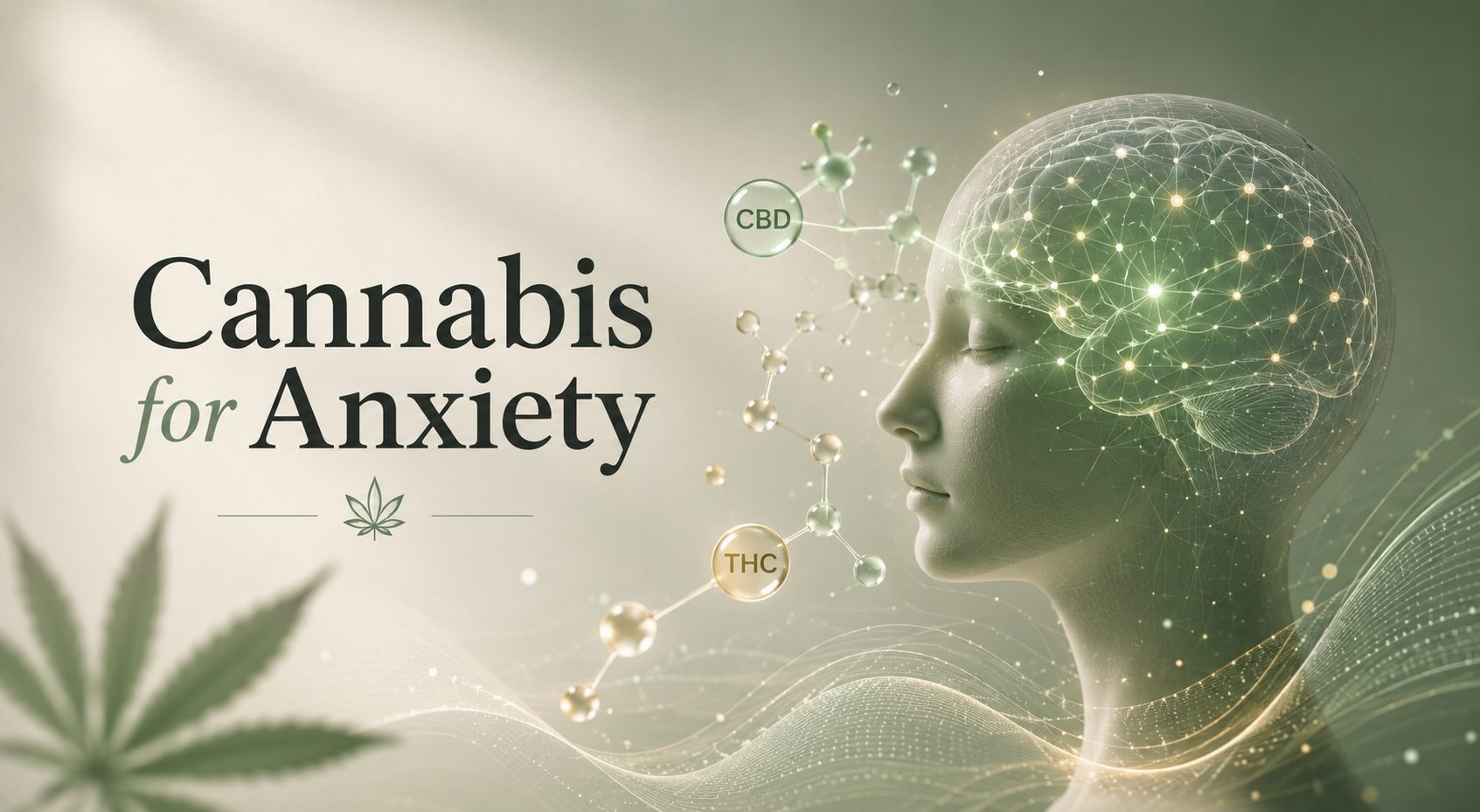
Cannabis can make one person feel calmer and another feel intensely anxious. It can also affect the same person differently on different occasions. THC exposure, individual sensitivity, existing anxiety, medicines, alcohol, sleep, setting, and product variability all matter.
The evidence does not support promising that a particular strain, terpene, or fixed dose will treat anxiety. Cannabis can trigger panic, impaired judgment, rapid heart rate, dizziness, or paranoia, especially with higher-THC products or when more is taken before the first dose has fully taken effect.
THC and anxiety
Research suggests THC can have dose-dependent effects, but there is no universal “calming dose.” People vary substantially in sensitivity, and labelled potency may not predict the effect of inhaled flower precisely.
Higher THC exposure is more likely to cause anxiety and panic. Risk can also be greater for people with panic disorder, psychosis risk, cardiovascular disease, pregnancy, or interactions with medicines and alcohol.
What about CBD?
CBD is non-intoxicating, and researchers are studying it for several anxiety conditions. Results from controlled studies cannot be translated into a retail dosing recommendation because study products, doses, diagnoses, and supervision differ. Commercial CBD products also vary in composition and may interact with medicines.
Do not stop prescribed anxiety treatment or substitute CBD without speaking to the clinician who manages your care. The US NCCIH cannabis overview summarises the evidence, uncertainties, adverse effects, and interaction risks.
Strain and terpene claims
Names such as indica, sativa, and strain branding are not clinical standards. Terpenes may affect aroma and could have biological activity, but current evidence does not justify claiming that β-caryophyllene, linalool, myrcene, or a particular strain will treat an anxiety disorder.
A product label and Certificate of Analysis can describe composition; they do not prove a medical outcome for an individual patient.
If cannabis has caused anxiety or panic
- Stop taking more cannabis.
- Move to a calm, safe environment and avoid driving.
- Do not add alcohol or other drugs.
- Ask a trusted sober person to stay with you.
- Seek urgent medical help for chest pain, fainting, breathing difficulty, seizure, severe confusion, dangerous behaviour, or symptoms that are not improving.
If cannabis repeatedly worsens anxiety, stop using it and discuss the pattern with a qualified clinician. Repeatedly trying different retail products is not a substitute for assessment.
When cannabis is a poor choice
Speak with a clinician before use if you have a personal or family history of psychosis, bipolar disorder, significant heart disease, severe panic symptoms, pregnancy or breastfeeding, substance-use problems, or medicines that may interact. Do not use cannabis to delay professional care for worsening anxiety, depression, suicidal thoughts, or loss of function.
How Stash BKK handles medical questions
Budtenders can explain labels, cannabinoid content, Certificates of Analysis, and current inventory. They do not diagnose anxiety or prescribe a treatment. Stash BKK can facilitate a PT33 telemedicine assessment with an authorised practitioner; the practitioner decides whether cannabis is medically appropriate and writes any dosage and quantity instructions.
FAQ
Does cannabis treat anxiety?
Evidence is mixed and patient response varies. THC can worsen anxiety or trigger panic, and no retail product should be presented as a guaranteed anxiety treatment.
Is CBD proven to treat anxiety?
CBD is being studied, but research results do not create a universal retail dose or prove that every commercial CBD product is effective. Product quality and medicine interactions matter.
What is the best strain for anxiety?
There is no clinically established “best strain.” Discuss symptoms and risks with an authorised practitioner rather than relying on strain names or terpene marketing.
Can cannabis cause a panic attack?
Yes. Higher THC exposure, edibles with delayed onset, unfamiliar settings, and individual vulnerability can increase the risk. Seek medical help if symptoms are severe or do not improve.