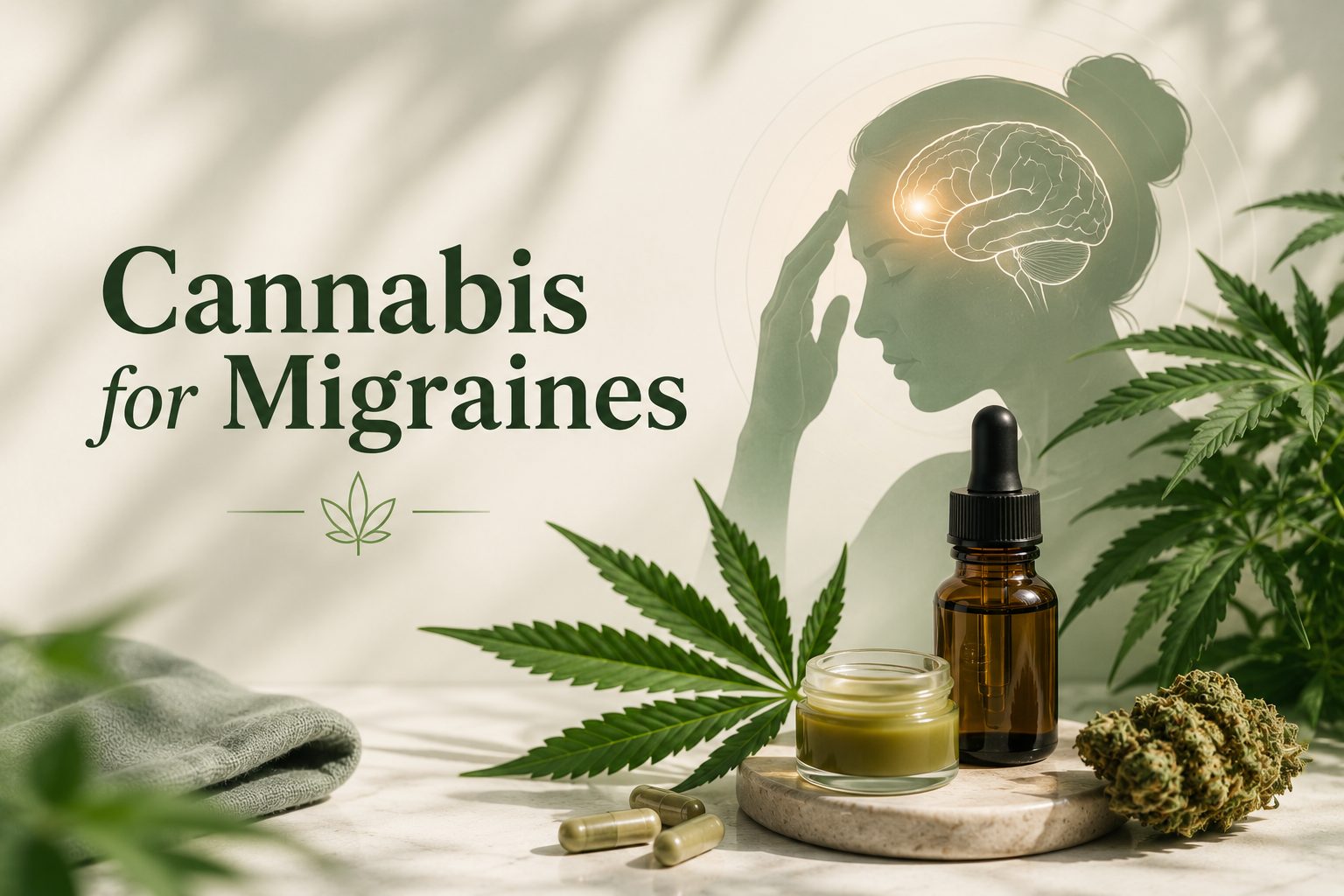
Some people report using cannabis or cannabinoids for migraine symptoms, but that does not make cannabis a proven first-line migraine treatment. Studies use different products, doses, routes, and outcome measures, and much of the available evidence is observational. Results cannot be turned into a universal retail recommendation.
This page is educational. It does not diagnose migraine or recommend a product, route, strain, or dose.
What the evidence supports
Research into cannabis and cannabinoids for pain is broader than research specifically for migraine. The US NCCIH evidence overview describes only modest evidence for some chronic-pain uses and notes important uncertainty, side effects, product variation, and medicine interactions.
Migraine studies do not establish that smoked flower, edibles, CBD, THC, or a named strain is reliably effective or safe for a particular person. Observational improvements can be affected by selection bias, expectation, inconsistent labels, and concurrent treatments.
Risks that matter
- THC can cause anxiety, panic, dizziness, impaired judgment, rapid heart rate, or vomiting.
- Inhaled smoke can harm the lungs and cardiovascular system.
- Edibles can have delayed and unpredictable effects, increasing the risk of taking too much.
- Frequent use can lead to tolerance, dependence, withdrawal symptoms, or recurrent vomiting.
- Cannabis and CBD can interact with medicines. Combining intoxicants can increase impairment.
Do not stop or replace a prescribed migraine treatment based on a dispensary article. Tell the clinician or pharmacist managing your migraine about every cannabis or CBD product you use.
Strains, terpenes, and dosage
There is no clinically established “best strain for migraine.” Indica/sativa labels, terpene names, THC percentages, and a Certificate of Analysis describe aspects of a product; they do not prove a treatment outcome.
Stash BKK budtenders can explain labels and available records. They should not tell a customer to smoke a certain number of pulls, take a fixed CBD dose, or replace prescribed migraine care. Individual medical instructions must come from the authorised practitioner who has assessed the patient.
When a headache needs urgent care
Seek urgent medical care for a sudden or “worst-ever” headache, headache after a significant injury, fainting, seizure, new weakness or numbness, trouble speaking, severe confusion, fever with neck stiffness, major vision change, chest pain, or symptoms that are rapidly worsening.
New, frequent, changing, or disabling headaches also deserve clinical evaluation even when emergency warning signs are absent.
The Thai medical context
Controlled cannabis flower sits within Thailand’s current medical framework. Stash BKK can facilitate a PT33 telemedicine assessment during a visit, typically 10–15 minutes and 100 THB, subject to practitioner availability. The authorised practitioner—not the shop—decides whether cannabis is medically appropriate and records any dosage and quantity directions.
FAQ
Does cannabis treat migraines?
The evidence is not strong enough to promise that it will. Some people report benefit, others do not, and adverse effects are possible.
Is CBD proven for migraine prevention?
No universal CBD product or retail dose has been established for migraine prevention. Discuss it with the clinician managing your headaches, especially if you take other medicines.
Should I smoke cannabis during a migraine?
This page does not recommend smoking. Inhaled smoke has health risks, and a route or dose should not be chosen without individual clinical advice.
Can cannabis cause headaches?
Headaches can occur with intoxication, withdrawal, dehydration, product overuse, or other conditions. Persistent or severe symptoms need medical assessment rather than repeated self-treatment.