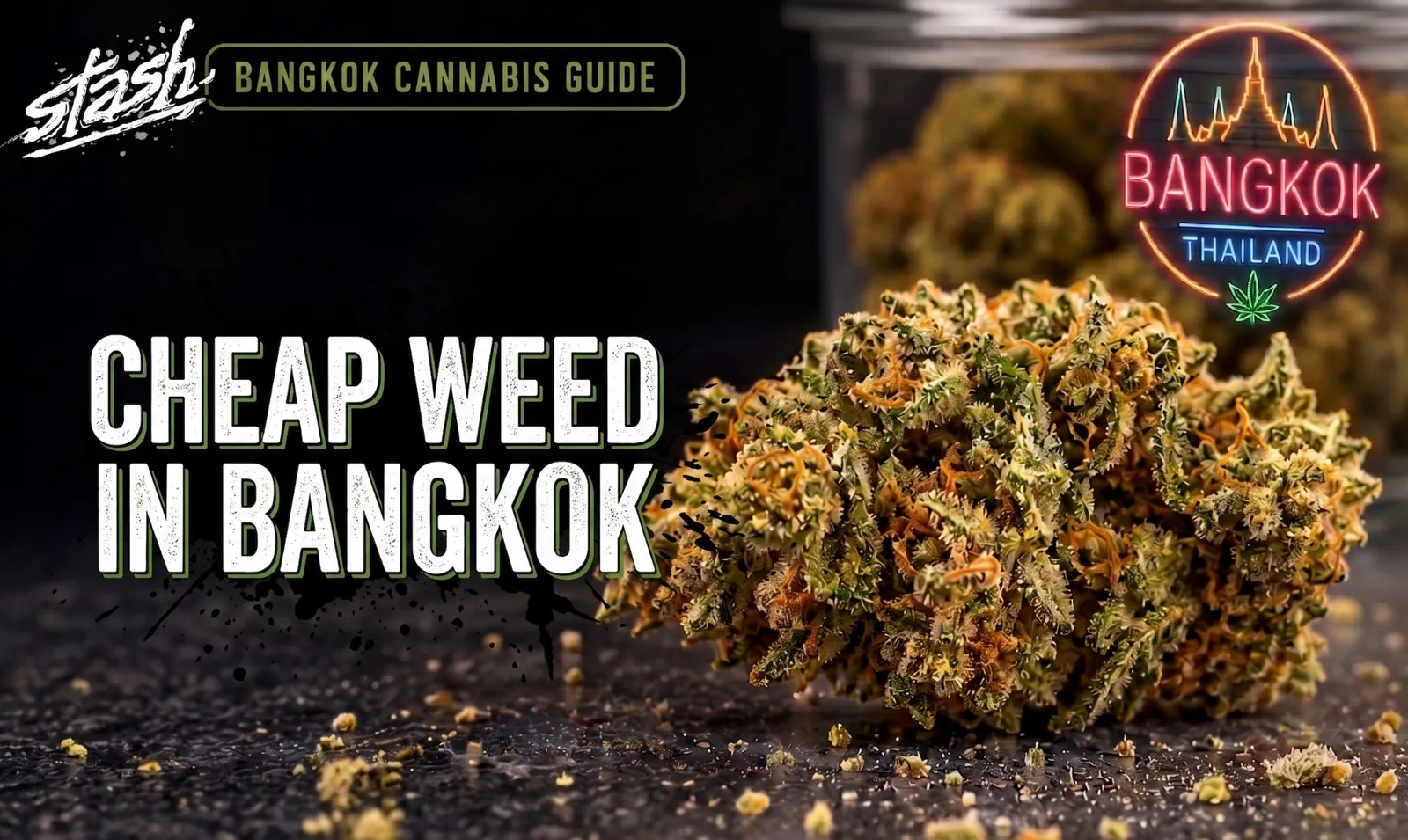
Nobody's going to judge you for searching for cheap weed in Bangkok. You're on a trip, you want to enjoy it, and the price range at dispensaries here can be confusing if you don't know what you're actually looking at.
So let's sort it out. What does weed cost, what does the difference in price actually mean, and where's the real value?
What Does Weed Actually Cost in Bangkok?
Under the current medical framework, controlled cannabis flower requires a PT33 prescription. Stash BKK can facilitate a telemedicine assessment during a visit, typically around 10–15 minutes and 100 THB, subject to practitioner availability. The practitioner decides whether cannabis is medically appropriate and what quantity, if any, to prescribe.
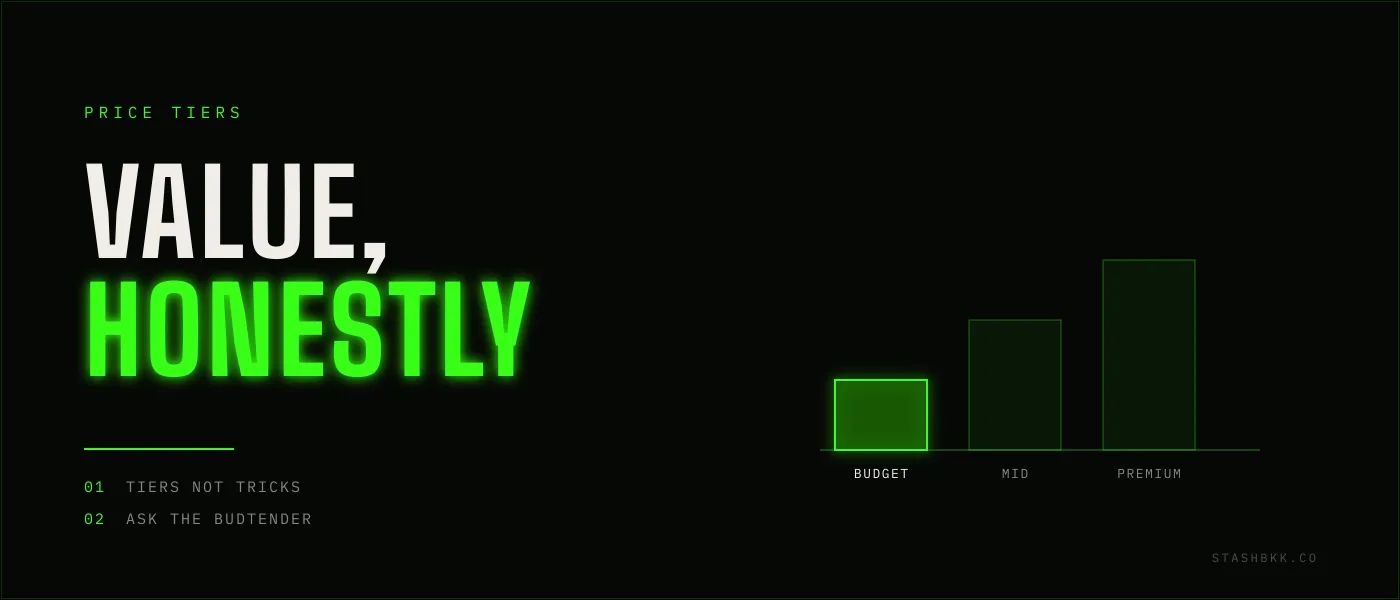
Product prices at licensed dispensaries generally fall into three tiers:
Budget
Thai-grown, greenhouse or outdoor, lower THC ceiling. The cheapest end of any reputable menu — usually the daily-driver shelf for locals.
Mid-range
Better genetics, more consistent grow, often lab-tested. This is where most people who care about the experience but aren't chasing the top end actually live.
Premium
Indoor-grown, imported genetics (Cali, Dutch), full terpene profile, higher THC. Worth it when you want it, overkill when you don't.
From bottom to top, you're looking at more than a 2x price difference on the same shelf. The quality gap is also real — though it's not always linear. Some mid-range Thai-grown product genuinely punches above its weight. The premium tier is premium for a reason, but you don't always need to be there.
What Actually Drives the Price Difference
Genetics. Thai-grown bud using domestically available seeds is cheaper than product grown from imported Californian or Dutch genetics. The local stuff isn't bad — some of it is genuinely solid — but the ceiling is different. If someone is advertising "Cali genetics" at the lowest price on the menu, either those aren't Cali genetics or something else is off.
Growing conditions. Indoor-grown, climate-controlled, properly cured product costs significantly more to produce than outdoor or greenhouse grows. Both are legal. Both are sold at dispensaries. The price usually reflects which you're getting.
Lab testing. Any decent dispensary should be able to tell you the approximate THC content of what they're selling. Testing costs money. Budget products sometimes skip it. If a shop can't tell you roughly what's in what they're selling, that's worth noting.
Location overhead. Part of what you're paying at some dispensaries is their rent. A beautifully designed shop on Sukhumvit Soi 11 is paying significantly more for that space than a shop one or two BTS stops further out. The product isn't necessarily better — you're partly paying for the address.
Where the Actual Value Is
The best value in Bangkok isn't the cheapest gram — it's the cheapest gram that's actually good for what you want. A bargain-shelf gram you go through twice as fast to feel anything isn't better value than a mid-shelf gram you use once and are happy with.
Dispensaries in On Nut, Phra Khanong, Ari and similar areas further from the tourist core tend to have lower overheads and often more honest pricing. You're not paying for the Sukhumvit Soi 11 experience.
At Stash BKK — a licensed weed shop in Bangkok with three locations — we stock across the range. The current on-site telemedicine consultation fee is 100 THB; the practitioner decides whether to issue a PT33 after assessment. Product price is separate. Tell staff your budget and the practitioner's directions, and they can explain matching inventory without replacing medical advice.
If you're newer to all this, our complete Bangkok cannabis guide walks through the law, the prescription, and how the menus work before you start comparing prices.
No information on THC content or grow source. Heavy sales pressure or pushing you to decide fast. Prices significantly below other licensed shops with no explanation. Or a seller that treats the PT33 as automatic paperwork instead of an independent medical assessment. These are signs to walk out.
Street Prices Exist. Here's What That Means.
Buying from an unlicensed source in Thailand carries legal risk that buying from a licensed dispensary does not. This gap matters more here than in some other countries — we cover what buying off the street actually involves in a separate post.
Since the June 2025 reclassification, controlled cannabis flower requires a PT33 prescription issued after an authorised practitioner's assessment. A retailer may facilitate access to that assessment but cannot issue or guarantee the prescription. A street seller cannot provide a compliant retail or medical process. Factor that into what “cheap” actually means.
FAQ
What's the cheapest dispensary in Bangkok?
Prices vary by area and product. Dispensaries away from the tourist-heavy Sukhumvit Soi 5–11 corridor tend to run cheaper. On Nut, Phra Khanong, Ari, and areas in northern Bangkok often have more accessible pricing.
Is cheap weed in Bangkok safe to buy?
A licensed shop may dispense controlled flower only when current requirements are met and an authorised practitioner has issued a PT33 after assessment. Stash BKK can facilitate a telemedicine assessment during a visit, subject to practitioner availability and independent decision. Unlicensed sources carry significant legal risk regardless of price.
Does Stash BKK have budget-friendly options?
Stash BKK can facilitate a PT33 telemedicine assessment for 100 THB, subject to practitioner availability and independent decision. If a prescription is issued, staff can then explain the current labelled products within your budget; stock rotates.
Is there a membership discount at Bangkok dispensaries?
Many dispensaries including Stash BKK have loyalty or membership programs that bring the per-gram cost down for regular customers. Worth asking on your first visit.
What's the difference between Thai weed and imported genetics?
Thai-grown cannabis using local genetics tends to be cheaper and can be quite good, especially for a relaxed sativa-leaning experience. Imported genetics (Californian, Dutch) are more expensive and generally offer higher THC content and more complex terpene profiles. Neither is objectively better — it depends what you're looking for.