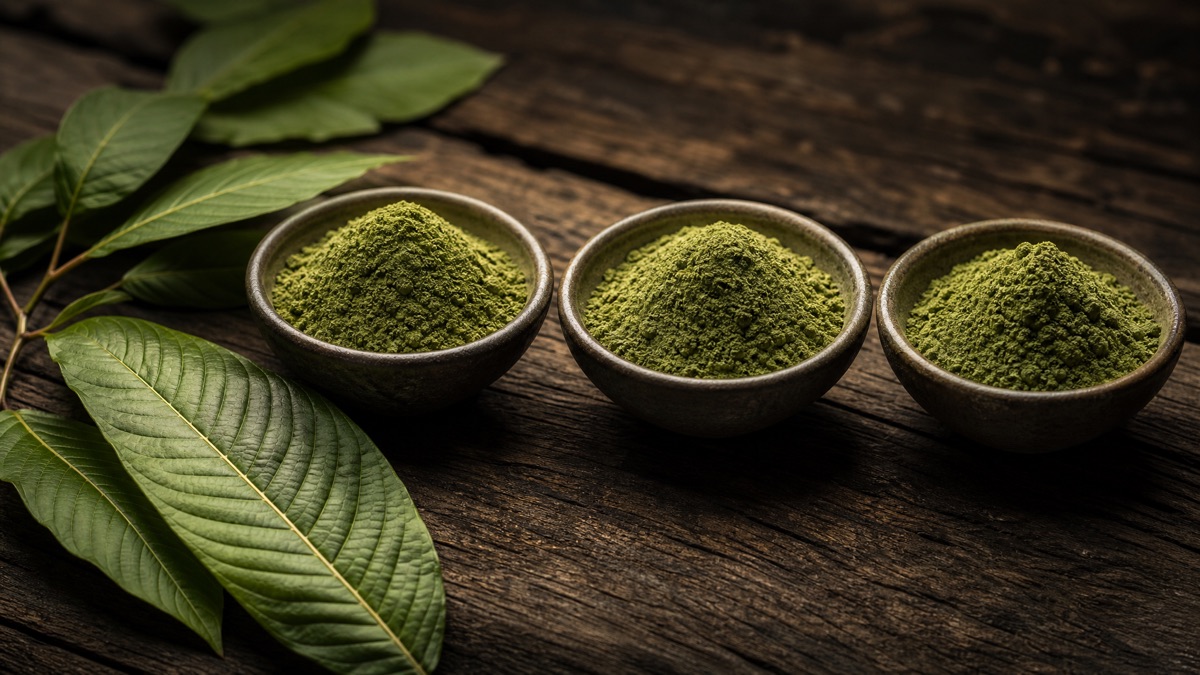
Search for kratom effects and you'll find two kinds of pages: sellers promising it does everything short of paying your rent, and warnings written by people who've clearly never been within ten metres of the plant. Neither is much use if you just want to know what kratom actually feels like.
We sell kratom powder at our Bangkok shops, so we get this question across the counter most days. Here's the honest version — what people commonly report, what's still uncertain, and where the real cautions are.
One thing to be clear about upfront: this is a guide to reported effects, not claimed benefits. Kratom is not a medicine, we don't sell it as one, and nothing on this page is medical advice.
What Is Kratom, Exactly?
Kratom (Mitragyna speciosa) is a tropical tree in the coffee family, native to Thailand and the surrounding region. The leaves contain alkaloids — mainly one called mitragynine — that produce noticeable effects when the leaf is chewed, brewed, or taken as dried powder. It's been part of rural Thai life for generations, and it's been legal here since 2021 under the Kratom Plant Act.
We covered the legal status and where to buy in a separate post. This one is about the part people actually ask about: what it does.
Kratom Effects Depend Heavily on Dose
The single most useful thing to understand about kratom is that it's biphasic — the effect changes character with the amount, not just the intensity.
- At low amounts, people commonly report a stimulating effect: alertness, energy, talkativeness, focus. The comparison you hear most often is strong coffee with rounder edges.
- At higher amounts, the reported effect flips: a heavy, settled calm, relaxation, drowsiness, and a dulled awareness of physical discomfort. More evening than morning.
The working explanation is that mitragynine interacts with different receptor systems at different amounts — stimulant-like pathways at low doses, with opioid-receptor activity becoming more dominant as the dose climbs. That receptor profile is also exactly why the caution section below deserves your attention. But be clear about how thin the science is: most of what's "known" about kratom effects comes from user surveys and animal studies, not clinical trials. Reported, not proven, is the honest framing.
Individual variation is large. Body weight, whether you've eaten, your general sensitivity, and the batch itself all shift the outcome. Two people taking the same spoon of the same powder can have noticeably different evenings.
Everything on this page describes effects users commonly report — not benefits we're claiming. Kratom hasn't been through the clinical research that would justify health claims, and we're not going to make them. Nothing here is a substitute for medical advice: if you take medication, are pregnant, or have any health condition, talk to a doctor before going near it.
White, Green, Red — What the Vein Colors Actually Tell You
Kratom is sold by leaf vein color, and the three-lane system is the same everywhere: white, green, red. Here's the shorthand, followed by the honesty.
White vein
Commonly reported as the most stimulating of the three — the one people reach for as a coffee-adjacent daytime option.
Green vein
The middle lane. Reported as balanced — some lift, some calm — and it's the sensible default if you've never tried kratom before.
Red vein
Commonly reported as the most relaxing and sedating end of the range. The evening pick.
Now the honesty: vein color does reflect real differences in leaf maturity and how the leaf was dried and processed, but the neat white-green-red personality system is partly marketing convention. Batch-to-batch variation within one color is often bigger than the difference between colors, and your dose moves the needle far more than the label does. A large amount of white will still sit you down; a small amount of red won't knock you out. Treat the colors as a starting point, not a promise — the same advice we give about indica and sativa labels on the cannabis side.
Onset and Duration
With powder on a fairly empty stomach, people commonly report first effects within 20–40 minutes, a peak somewhere around the one-to-two-hour mark, and most of it faded within 3–5 hours. A full meal beforehand slows the onset and softens the peak. Tea drinkers tend to report a somewhat faster come-on.
The practical takeaway: don't re-dose because "nothing's happening" at minute twenty-five. Give it the full hour before you draw any conclusions. Most unpleasant kratom experiences start with someone getting impatient.
What Is Kratom Used For?
Historically, in Thailand, the answer is simple: work. Farmers and manual labourers, particularly in the south, chewed fresh kratom leaves to get through long days in the heat. That's a documented piece of Thai rural history — we're describing it, not endorsing it as a lifestyle plan.
Today, people take it for the reported effects above — a lift at small amounts, a wind-down at larger ones. You'll find plenty of bigger claims about kratom online. Some people self-report using it for all sorts of reasons, but the clinical research to back those uses doesn't exist yet, it isn't an approved treatment for anything, and we're not going to dress reported effects up as therapy. What it's "for" is, honestly, still an open question that research hasn't caught up with.
Forms: Powder and Tea
The standard retail form is dried, ground leaf powder. People either mix it into water or juice and drink it quickly — the taste is genuinely bitter, nobody pretends otherwise — or brew it into a tea, which is closer to the traditional preparation and a bit gentler on the stomach.
At Stash BKK we stock kratom in three strains as dried ground powder, sold to adults 20 and over with ID, across our three Bangkok branches. If you're not sure which color fits what you're after, ask at the counter and you'll get a straight answer.
The Caution Side, Honestly
This is the section most kratom sellers skip. We'd rather you read it.
- Dependence is real with heavy daily use. Because of that opioid-receptor activity, taking kratom every day for an extended stretch builds tolerance, and stopping after heavy daily use is associated with genuine withdrawal — irritability, aches, low mood, poor sleep. Occasional use has a different risk profile, but the daily habit is the pattern to watch. It creeps.
- Nausea is the most common complaint. It's dose-related: push past your level and you get nausea and dizziness instead of anything pleasant. Another argument for going slowly.
- Don't mix it. Not with alcohol, not with sedatives, not with other substances. Stacking kratom on top of other downers is where most of the genuinely bad kratom stories come from.
- Start low. Smallest sensible amount, wait the full hour, and adjust next time — not the same evening. Boring advice, and correct.
Questions? Ask at the Counter
Three kratom strains in dried ground powder, and staff who'll give you straight answers. Stash BKK Chinatown permanently closed on 1 September 2026, after its final trading day on 31 August. The three current Stash BKK locations are On Nut, Ari and Ekkamai; all are open 24 hours. Current addresses and directions.
FAQ
What does kratom feel like?
It depends on the amount. At low doses people commonly report a coffee-like stimulation — alertness, energy, focus. At higher doses the reported effect shifts to a heavy calm and drowsiness. Individual variation is large, so the label on the bag only tells you so much.
How long do kratom effects last?
Commonly reported: first effects within 20–40 minutes on a fairly empty stomach, peaking around one to two hours, mostly faded within 3–5 hours. Food beforehand slows and softens it.
What's the difference between white, green, and red kratom?
The shorthand: white is reported as most stimulating, red as most relaxing, green in the middle. The honest version: vein color is a rough starting point, batch variation is significant, and dose changes the character of the effect more than color does.
Is kratom addictive?
With heavy daily use, dependence is a documented risk — tolerance builds and stopping can bring withdrawal symptoms like irritability, aches, and poor sleep. Occasional, spaced-out use carries a different risk profile, but nobody should pretend the risk is zero.
Can you mix kratom with alcohol?
Don't. Combining kratom with alcohol, sedatives, or other substances raises the risk of nausea, dizziness, and worse. If you're drinking, skip the kratom that night.
What is kratom used for?
Traditionally in Thailand, farmers chewed the fresh leaves to get through long working days — a historical fact, not an endorsement. Today people take it for its reported stimulating or relaxing effects. It isn't an approved treatment for any condition, and claims beyond reported effects aren't supported by clinical research.