“Medical grade,” “premium,” and “top shelf” sound reassuring, but the words alone do not prove a specific legal quality grade. The useful evidence is more concrete: the seller’s current licence, the exact product batch, its source and test records, how it was stored, and whether the medical process is genuine.
Is “medical grade” an official cannabis grade?
Not as a simple universal badge for retail cannabis flower. A seller may use the phrase to describe sourcing, testing, consistency, or intended medical use, but that language is not a substitute for licensing or batch documentation.
Thailand’s framework has also been changing. DTAM’s current guidance treats cannabis flower as a controlled herb, regulates its sale and advertising, and links newer licensing pathways to documented sources such as GACP-certified cultivation or qualifying laboratory evidence. DTAM also explains that qualifying older licences can continue until expiry before conversion to the newer requirements.
Official references:
The six checks that matter
1. A current, relevant licence
Ask which licence covers the sale of controlled cannabis flower and check its validity period. Do not reject a shop merely because it holds an older-format document: transitional licences may remain valid until their stated expiry.
2. The exact batch identity
The product name on a menu is not enough. Look for a batch or lot reference and source information that can connect the flower to its records.
3. A COA that actually matches
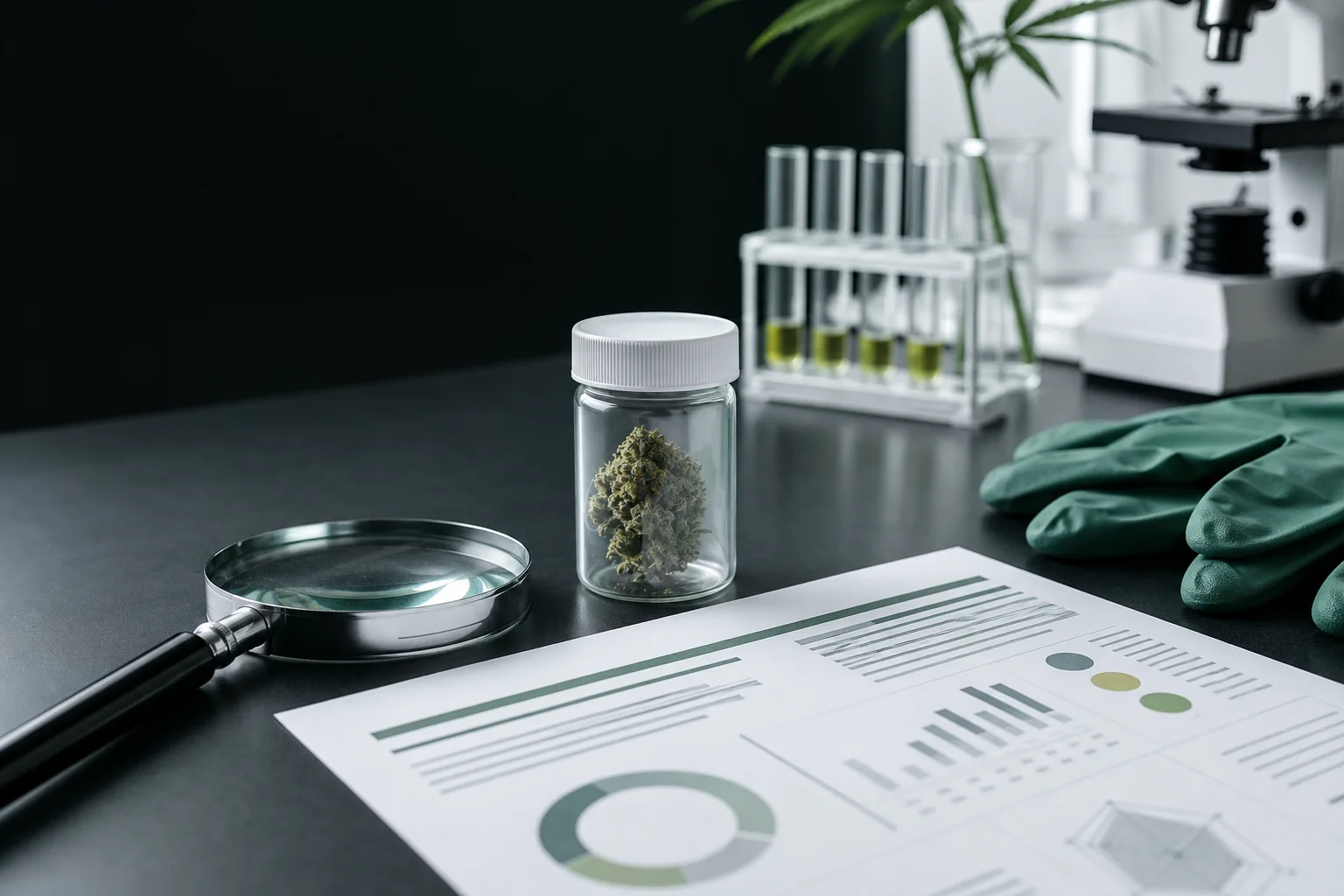
A certificate of analysis is useful only if it relates to the exact batch. Check:
- Batch or sample identifier
- Laboratory name and report date
- Cannabinoid results
- Relevant contaminant tests, such as pesticides, microbes, heavy metals, or residual solvents when applicable
- Whether the report is complete rather than a cropped screenshot
A COA does not prove everything, and not every historic retail batch will sit under the same transitional documentation pathway. It is still one of the clearest pieces of evidence a customer can ask about.
4. Source and GACP information
GACP refers to good agricultural and collection practices. It concerns cultivation and handling standards; it does not mean every product from a certified source is automatically identical. Ask where the product was grown and what record connects that source to the retail batch.
5. Storage condition
Even well-produced flower can deteriorate through heat, humidity, light, or repeated handling. Look for clean containers, controlled access, clear separation of products, and staff who can explain when the jar was opened or stocked.
6. A real medical process
PT33 records medical authorization under the applicable process. It is not a quality certificate and does not turn an undocumented batch into “medical grade.”
At Stash BKK, an appropriately licensed practitioner—not a budtender—makes the medical decision. Where required, a PT33 telemedicine consultation is arranged during the in-store visit.
Red flags
- “Medical grade” with no explanation of the standard
- A COA that has no matching batch number
- A report with the laboratory name or date hidden
- Cure guarantees or claims that one product is safe for everyone
- No source information
- Flower stored in heat, direct light, or frequently handled open jars
- Online or delivery offers for controlled cannabis flower
- No age or eligibility check
What to ask at the counter
You do not need to interrogate the team. Four direct questions are enough:
- Which current licence covers this shop?
- Where did this exact batch come from?
- Is there a batch-linked COA or other test record I can inspect?
- If PT33 is required, who makes the medical decision?
Good staff should answer plainly, distinguish what they know from what the practitioner decides, and avoid guaranteeing outcomes.
Compare the nearest Stash BKK branch
Stash BKK Chinatown permanently closed on 1 September 2026, after its final trading day on 31 August. The three current Stash BKK locations are On Nut, Ari and Ekkamai; all are open 24 hours. Current addresses and directions.
Find the closest branch →Frequently asked questions
Does “premium cannabis” mean lab tested?
No. “Premium” is a positioning term. Ask for the exact batch records and test scope.
Is a COA legally required for every product?
Requirements depend on the licence, source, and transition pathway. DTAM’s newer framework places importance on GACP-certified sources and qualifying laboratory evidence, while some older licences remain valid until expiry.
Is PT33 proof of product quality?
No. PT33 concerns medical authorization. It does not certify cultivation quality, laboratory results, or storage.
Can Stash BKK sell cannabis online or deliver it?
No. Stash BKK does not sell online or deliver any product. Visit a branch for the regulated in-store process.
Updated: 24 July 2026. This is general information, not legal or medical advice. Thai rules and licensing procedures can change.