If you've spent any time around cannabis culture, you've heard it: "White ash means it's good weed." It gets repeated on YouTube, in dispensaries, on Reddit, in conversations between people who think they know what they're talking about.
It's not wrong. But it's not the whole story, and treating it as a clean pass/fail test gets you to wrong conclusions about the bud in your hand. Here's the honest version.
Where the white ash test came from
The idea makes sense on the surface. Cannabis plants are fed nutrients during their grow cycle. In the last couple of weeks before harvest, a careful grower will flush the plant — give it plain water only, so it uses up the leftover nutrients in its tissue before being cut. After harvest, the bud needs to be cured properly — dried slowly in controlled humidity for two to four weeks (sometimes longer) so the chlorophyll breaks down and the smoke gets smooth.
A well-flushed, well-cured bud tends to burn cleanly. Less leftover plant matter, less leftover salts and minerals from the nutrient feed. The ash often ends up light grey to white.
So the chain of logic is: white ash → clean burn → good flush + cure → good grower → probably good weed. Each link is roughly true. The problem is that any of those links can break without making the weed bad, and the chain isn't the only way to get to good weed.
What white ash actually tells you
White or very light grey ash is a reasonable signal that the bud was flushed properly and cured for a sensible amount of time. That's it. It means the grower probably didn't rush the last two weeks, and the dry process wasn't crammed into 48 hours.
Those are real positives. A rushed, unflushed, under-cured bud will often burn harsh, taste like chlorophyll or pepper, and leave dark gummy ash that you have to keep relighting. Avoiding that is worth something.
But "this bud was flushed and cured" is a much narrower claim than "this bud is good." Plenty of mediocre flower is flushed and cured competently. The grower can do the post-harvest part right and still have started with average genetics, light-starved plants, or a humidity-stressed grow room.
What white ash doesn't tell you
None of the things you actually care about are visible in the ash:
- Genetics. The strain. The terpene profile. Whether it's the kind of high you want. Ash colour says nothing about any of this.
- THC content. A 14% bud and a 28% bud can both burn to white ash. Potency depends on the cultivar and how it was grown, not how cleanly it combusts.
- Mould or contamination. Properly cured bud with the wrong storage history can still be problematic. White ash isn't a safety test.
- Freshness. Bud that's been sitting on a shelf for nine months can still burn to white ash. The cure was fine; the bud is just old and dry and the terpenes have evaporated.
- Whether you'll enjoy it. The thing that matters most. Ash doesn't tell you anything about flavour, effect, or how it fits your tolerance.
And black ash isn't always bad
The other half of the myth — dark ash means bad weed — is even shakier. Dense, resinous bud with a heavy trichome coating can burn to darker ash simply because there's more material to combust. Some genuinely premium indoor product leaves dark grey ash that flakes apart. If you're judging quality on ash alone, you'd reject some of the best flower on a menu.
There are real reasons ash goes dark: under-cured, unflushed, or contaminated bud. Bud that won't stay lit. Bud that tastes harsh from the first hit. But you can tell those things by smelling, looking, and smoking — not by staring at the joint after the fact.
White ash is a weak positive signal. Black ash is a weak negative signal. Both are worth maybe 10% of what you'd actually use to judge quality. The other 90% is smell, structure, trichomes, and how it smokes — things you can check before you light it.
What actually predicts quality
If you want a quick mental checklist when looking at flower before you buy:
- Smell. Strong, complex, distinct aroma — fuel, citrus, fruit, pine, gas, dessert, whatever the strain is meant to smell like. If the smell is faint or just smells like hay, the terpenes are gone or were never there.
- Structure. Dense, well-formed buds with intact calyxes. Not a bag of shake. Not crushed dust. Indoor-grown product tends to be denser and more uniform; outdoor can still be excellent but looks different.
- Trichomes. Visible frosty coating across the bud. Under a loupe or phone macro you should see milky-to-amber trichome heads, not clear or fully amber-degraded.
- Moisture. Slight give when you squeeze a bud, not crumbly, not damp. Sticky to the touch from resin, not from being wet.
- Lab data, if available. Reputable dispensaries can tell you the approximate THC content. If they have terpene percentages too, even better.
- How it actually smokes. Smooth on the throat, flavour matches the smell, even burn without aggressive canoeing.
You can run that checklist in 30 seconds before lighting up. The ash test only runs after.
How Stash BKK staff think about it
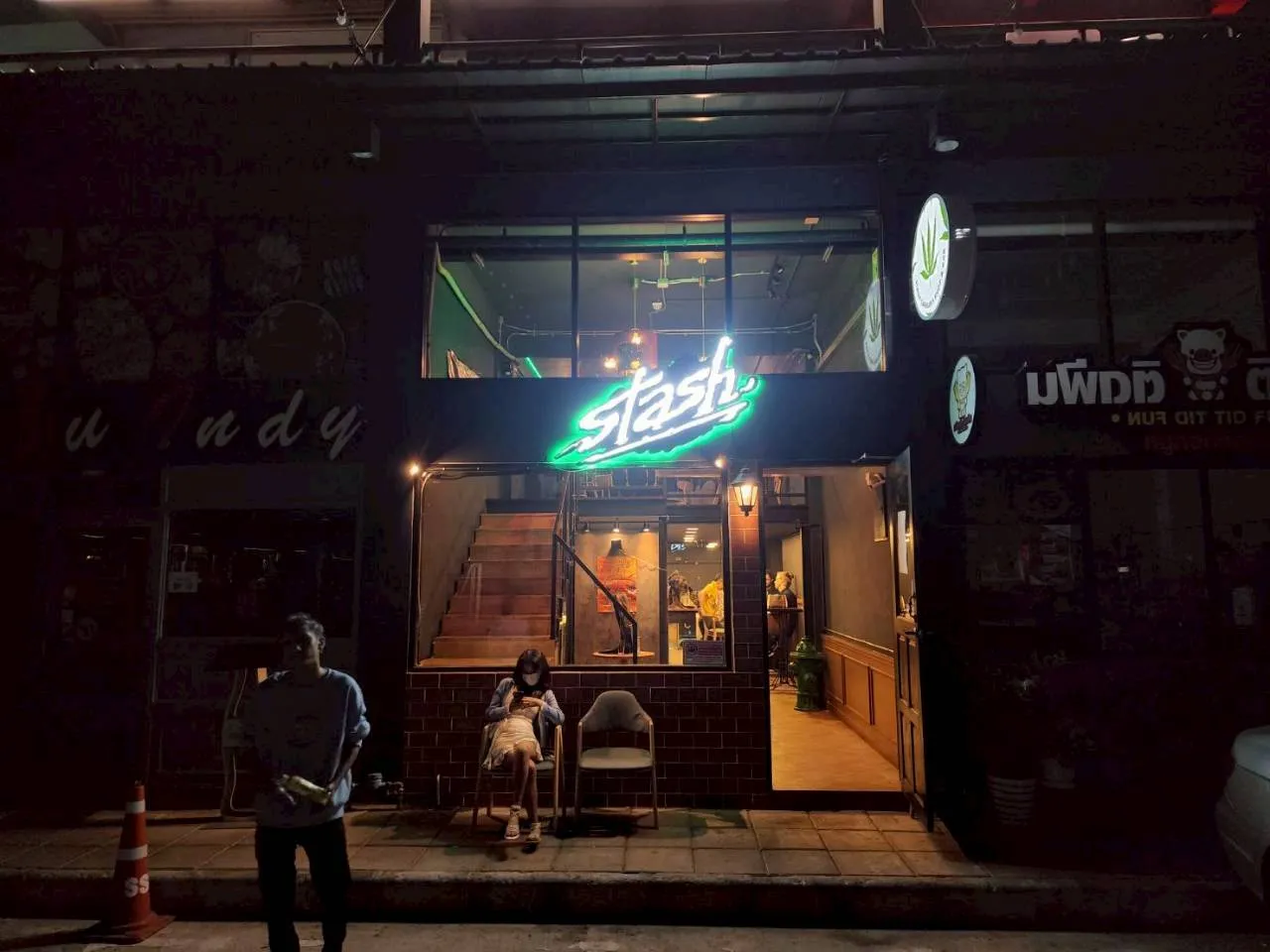
At Stash BKK, our budtenders are happy to talk you through what's on the shelf — what the strain is, what the terpene profile is meant to be, what the THC range is, and what kind of effect to expect. That's a more useful conversation than ash-watching.
Cannabis flower under the current Thai medical framework requires a PT33 prescription. Stash BKK can facilitate an on-site telemedicine assessment, typically 10–15 minutes and 100 THB, subject to practitioner availability. The practitioner decides whether to prescribe. Once that's sorted, you can spend time looking at the actual product instead of worrying about the legal layer.
If you've got the time, ask to see the jar. Smell it. Look at the structure. Ask what the cure looked like if you're curious. The white-ash test isn't useless, but it's the last thing to check, not the first.
FAQ
Does white ash always mean good weed?
No. White or light grey ash is a reasonable sign that the flower was flushed and cured properly, but it doesn't tell you anything about genetics, THC content, freshness, or whether you'll actually enjoy the strain. Treat it as one weak signal among several.
Why is the ash on my joint dark?
Common reasons: the bud wasn't flushed before harvest, it was cured too fast, or it picked up moisture. But dense, resinous, high-trichome flower can also leave darker ash simply because there's more material burning. Look at smell, structure, and smoking experience before judging on ash alone.
Is the white ash test useful at all?
It's a real signal, just an overrated one. If a bud burns to clean white ash, the post-harvest process was probably done well. If it burns to gummy black tar, something was rushed. Beyond those two extremes, the test doesn't tell you much.
What's the best way to tell if cannabis is high quality?
Use your senses before you light it. Strong, complex aroma. Dense well-formed structure. Visible trichome coating. Slight give when squeezed. Then trust how it actually smokes — smooth, flavourful, even-burning. Lab data on THC content (and ideally terpenes) is a useful tiebreaker. Ash colour is the least informative of all the things you can check.
Where can I find well-cured cannabis in Bangkok?
Licensed dispensaries that source from established Thai growers and import premium genetics. Stash BKK Chinatown permanently closed on 1 September 2026, after its final trading day on 31 August. The three current Stash BKK locations are On Nut, Ari and Ekkamai; all are open 24 hours. Current addresses and directions. Ask.