If the last thing you read about weed in Thailand was written in 2023, most of it is out of date. The country did not "ban it again," but 2026 is the year the medical framework introduced in mid-2025 grew teeth: a new licensing regulation, written penalties, a renewal squeeze that closed thousands of shops, and a national Cannabis Act that still has not passed. This is the Thailand cannabis situation in 2026, dated and in plain English.
Everything below is as of September 2026. Thai cannabis rules have changed materially roughly every twelve months since 2022, so treat this as a snapshot and check the DTAM medical-cannabis portal and Ministry of Public Health announcements before relying on any private website, including this one.
The short version
- Cannabis flower has been a controlled herb since June 2025. Buying it lawfully requires a PT33 prescription from an authorised practitioner, and you must be 20 or older with valid ID.
- Since 30 April 2026, a shop cannot simply hold a retail licence: the licence now has to be anchored to a qualifying medical, pharmacy, herbal-product or similar credential. A freestanding "just a weed shop" is no longer a viable licence model.
- Thousands of dispensaries did not survive the 2025–2026 renewal cycle. Only a minority of expiring licences were renewed under the stricter criteria.
- Since June 2026, penalties are written down: suspensions for paperwork failures, revocation for selling to under-20s, selling online, or allowing smoking on the premises.
- The draft Cannabis Act has not passed. Ministerial regulations, not an Act, are the operating law.
Timeline: how 2026 got here
- June 2025 — Cannabis flower is designated a controlled herb. Dispensing moves to the PT33 prescription form, recorded by an authorised practitioner.
- Late 2025 — The first big renewal wave. Shops whose licences expired had to meet tightened conditions; most did not, and thousands closed.
- Early 2026 — Supervision requirements for dispensing tighten, with qualified oversight expected during opening hours.
- 26 April 2026 — A separate regulation on cannabis and hemp extracts takes effect, restricting high-THC extracts to a short list of permitted purposes and licence holders.
- 30 April 2026 — Ministerial Regulation No. 2 on controlled herbs is published and takes effect for flower: the anchor-credential rule, new renewal criteria, storage, odour control and trained staff.
- 22 April – 21 May 2026 — Public consultation on the draft Cannabis and Hemp Act.
- 22 June 2026 — DTAM publishes graduated enforcement guidelines for licensed sellers.
- July 2026 — The draft Act misses the parliamentary session; a rival, stricter bill is filed.
What the April 2026 regulation did to dispensaries
The regulation published on 30 April 2026 is the single biggest change of the year, and it explains most of what you will see on the ground. Under it, an application to sell cannabis flower is only entertained when the premises already hold one of a short list of qualifying credentials: a hospital or clinic licence, a pharmacy or drug licence, a registered herbal-product manufacturing or sale licence, a cannabis-extract licence, certified folk-healer status, or a certified cultivation site. A shop that is nothing but a retail counter no longer fits the model.
Renewals must meet the same criteria, plus dedicated secure storage, odour and smoke control, and trained staff present throughout opening hours. Licences issued under the older 2020–2021 rules remain valid only until their expiry, with 31 December 2026 widely reported as the end of the road for the old-framework paperwork. Alongside this, the Ministry of Public Health has signalled a roughly three-year transition in which remaining shops are expected to align with a medical-facility model.
The practical result is fewer, more medical-looking shops. That is not a temporary dip; it is the direction of travel. For a fuller reference on the underlying law, see our Thailand cannabis law guide, and for the view from behind a counter during the 2025 reset, what the reset looked like inside a Bangkok dispensary.
Enforcement in 2026: the penalties are now written down
For most of 2025, "what happens if a shop breaks the rules" was an open question. Since 22 June 2026 it is not. DTAM's published guidelines set out graduated penalties for licensed sellers: shorter suspensions for record-keeping, licence-display and advertising failures; longer suspensions for dispensing without a prescription; and revocation for the serious categories, which include selling to anyone under 20, selling online or by vending machine, and allowing cannabis smoking on the premises. Repeat breaches escalate, and a suspension on record also counts against a shop at its next renewal.
A shop that lets you smoke inside, sells to you without an assessment, or offers delivery is now risking its licence, not just a warning. Treat a "lounge" as seating, not a smoking room, and treat any shop that skips the paperwork as a shop that may not be licensed at all. Our guide to telling a weed shop from a licensed dispensary covers what to check.
The Cannabis Act still has not passed
You will see confident headlines claiming Thailand "passed a new cannabis law" in 2026. As of September 2026 that is not accurate. The draft Cannabis and Hemp Act went through public consultation in April and May, was renamed and reworked over the summer, cleared only a first reading, and then missed the mid-year parliamentary session. A rival, stricter bill was filed in July, and the earliest realistic date for serious deliberation is early 2027.
Until an Act passes, the operating law is the June 2025 controlled-herb notification plus the two 2026 ministerial regulations. Plan around those. Anything an Act eventually does is a future change, not a current one.
What this means if you are visiting
For a traveller, surprisingly little of the buying process has changed since 2025; what has changed is how many shops can do it properly.
- The prescription step is the same. Cannabis flower requires a PT33 prescription under current Thai law. Stash BKK can facilitate an on-site telemedicine assessment, typically 10–15 minutes and 100 THB, subject to practitioner availability. The practitioner decides whether to prescribe. See how the PT33 works.
- Age and ID have not moved. 20 or older, valid ID or passport.
- Fewer shops, so check before you trust. A shopfront is not a licence. Look for the licence display and the prescription step.
- Smoking rules are stricter in practice. No public smoking, no assuming a lounge or balcony is authorised. See where you can and cannot smoke.
- Borders have not changed at all. Do not carry cannabis into or out of Thailand. See bringing cannabis in or out of Thailand.
Where Stash BKK stands
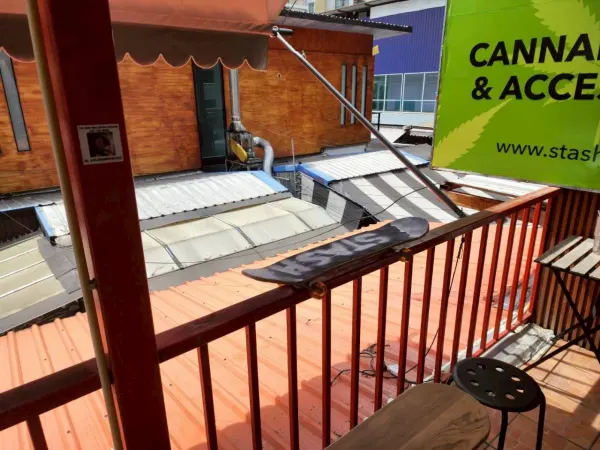
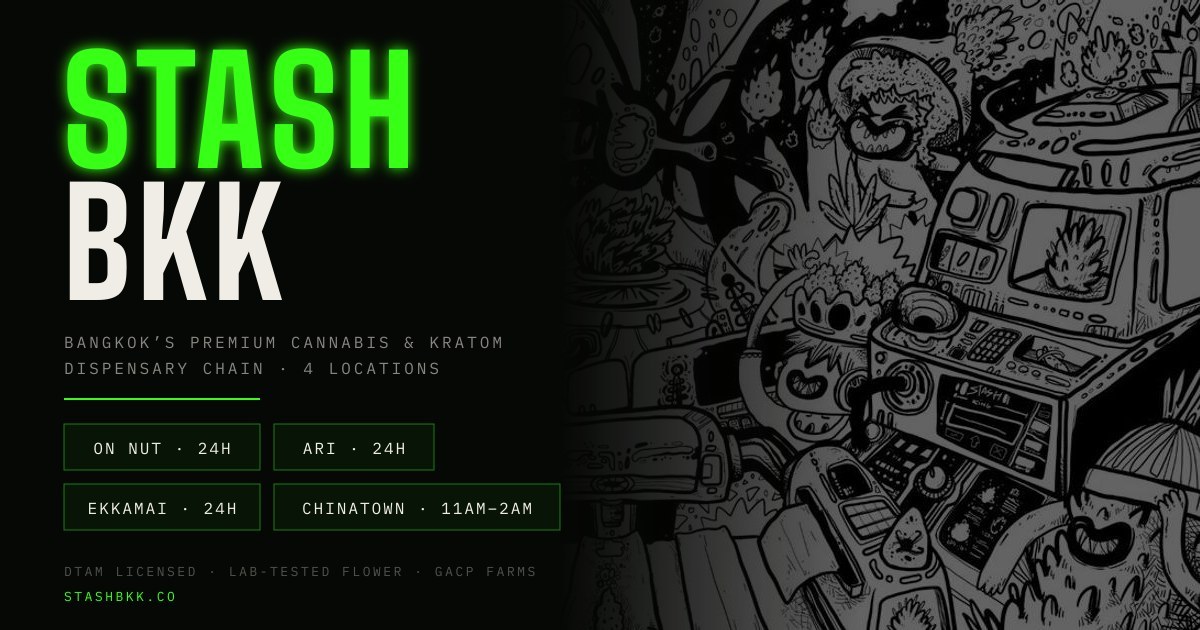
Stash BKK currently operates under its existing DTAM-issued retail licences while preparing for any required future conversion. Three branches — On Nut, Ari and Ekkamai — are open 24 hours. Every purchase of flower goes through the PT33 step, every customer is 20 or older with ID, and Stash BKK does not deliver any product, does not sell online, and does not advertise its customer lounges as smoking rooms. That is what operating inside the 2026 framework looks like from the customer side.
FAQ
Is weed still legal in Thailand in 2026?
Cannabis flower is available within a medical and controlled-herb framework when the requirements are met: a PT33 prescription from an authorised practitioner, a licensed seller, and a buyer aged 20 or older. That is not the open recreational market of 2022–2024, and it is not a ban either.
Did Thailand ban cannabis again in 2026?
No new ban was enacted. What happened in 2026 was tighter licensing (the 30 April regulation), written enforcement penalties (22 June), and a renewal cycle that closed many shops. The draft Cannabis Act has not passed.
Why did so many dispensaries close?
Because renewing a licence now requires a qualifying medical, pharmacy or herbal credential plus storage, staffing and record-keeping standards that a simple retail counter cannot meet. Only a minority of expiring licences were renewed in the last cycle.
Has the Cannabis and Hemp Act passed?
As of September 2026, no. It cleared a first reading and then stalled; a competing bill was filed in July, and deliberation is not expected before early 2027. Ministerial regulations are the current law.
Do tourists still need a prescription to buy flower?
Yes. The PT33 requirement applies to everyone. Foreign visitors can be assessed, but a prescription is issued only if the practitioner decides it is medically appropriate; a shop cannot issue or guarantee one.
Last reviewed: 13 September 2026. General information only, not legal advice. Thai regulations and enforcement can change; verify current DTAM and Ministry of Public Health guidance before acting.