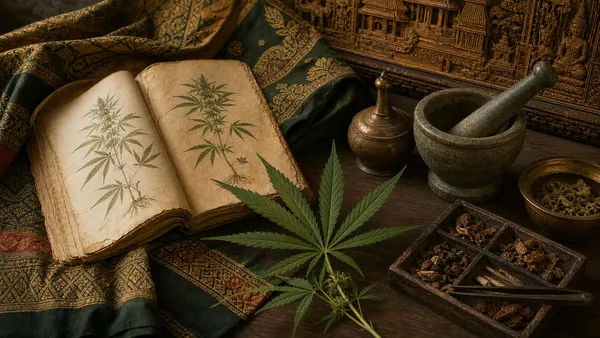
Here's a fact that surprises most people who walk into a Bangkok dispensary: the word "bong" almost certainly came from Thai. Not from California, not from Amsterdam — from a bamboo tube used in this part of the world long before any of the modern scene existed. Once you know that, Thailand stops looking like a latecomer to cannabis culture and starts looking like one of its quiet origin points.
So here's a short, honest history of three things people light up around the world — the bong, the blunt, and the near-mythical Thai stick — and where Thailand fits into each.
The bong is old. The word is Thai.
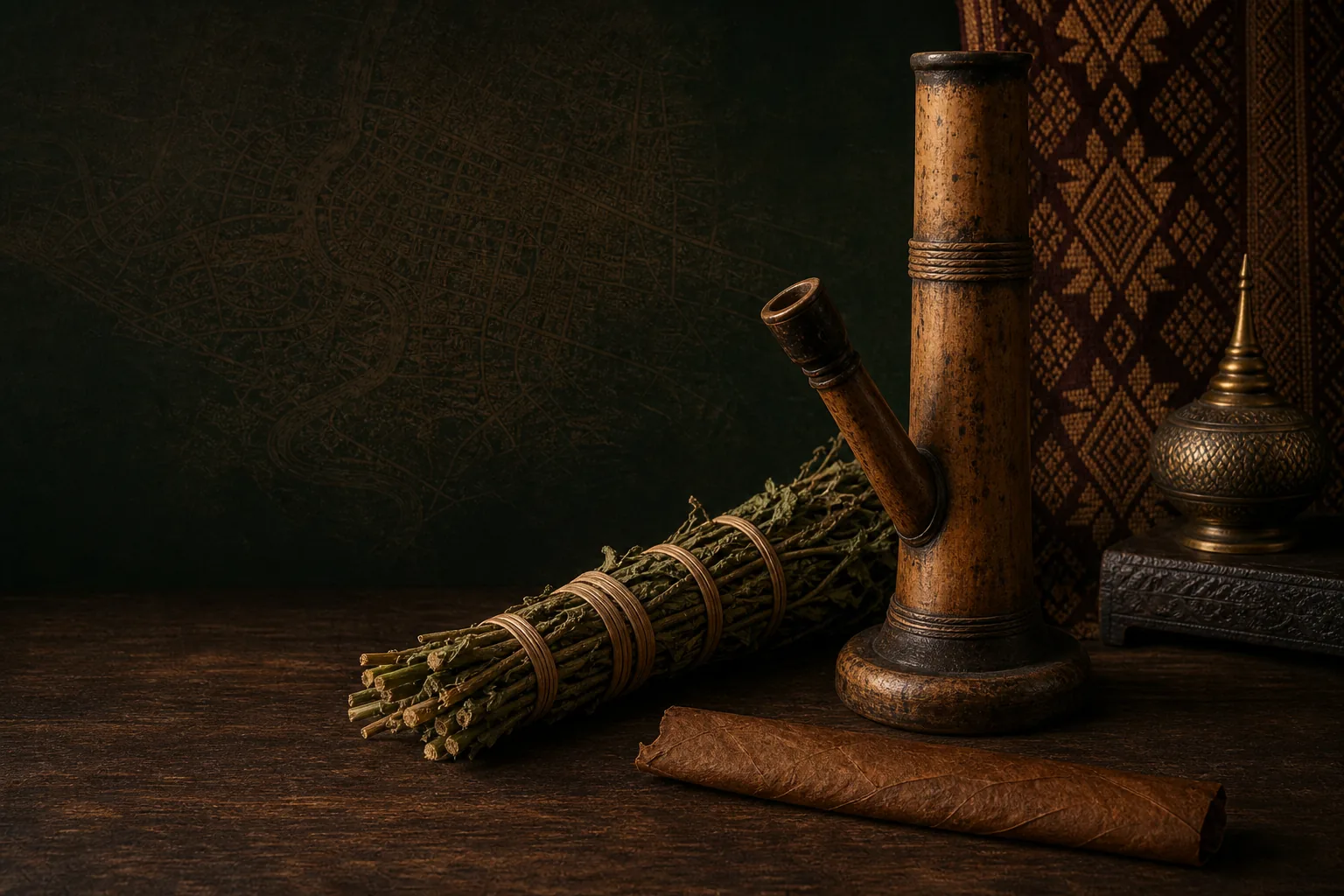
Water pipes themselves are ancient — versions show up across Asia and Africa going back centuries, so nobody "invented" the bong in the modern sense. What's better documented is the word. "Bong" is widely traced to the Thai บ้อง (baung) — a length of bamboo, including the bamboo water pipes used in rural Thailand and Laos. The term is generally credited to entering English around the 1960s–70s, when Western visitors and soldiers passing through the region picked up both the object and the name.
So the next time someone calls a glass piece a bong, they're using a Thai loanword. For a shop sitting in Bangkok, that's a nice bit of lineage rather than a marketing line.
Thai Stick: the legend that actually existed
If you've heard old-timers talk about "Thai stick" in reverent tones, they're not making it up. In roughly the late 1960s through the 1970s, cannabis from Thailand was bound onto thin sticks or skewers — buds tied into a tight cigar-like bundle — and it built a fierce reputation for potency and quality. It travelled, got mythologised, and became one of the first "premium imports" in the Western cannabis story before crackdowns and shifting trade routes made it fade by the 1980s.
The plant behind it matters as much as the format — that's its own story, which we get into in our piece on Thai landrace cannabis. The short version: Thai stick was built on pure equatorial sativa genetics that growers worldwide still chase.
Blunts and Backwoods: a different family tree
The blunt comes from a completely separate lineage — American, not Asian. A blunt is cannabis rolled inside a cigar or cigarillo wrapper, and the name is generally traced to Phillies Blunt cigars, with the practice popularised in New York and Caribbean-American communities through the 1980s–90s and carried worldwide by hip-hop culture.
Backwoods — introduced around the 1970s as a rustic, frayed-end cigar — became associated with that purpose through American blunt and hip-hop culture. That's the cultural history. The practical caveat is that a true Backwoods or cigar wrap is a tobacco product, so its licensing, sale, display, and advertising are governed separately from cannabis.
Stash BKK carries regulated cannabis products and ordinary smoking accessories under the applicable licences. Tobacco products are handled under separate Thai licences and controls and are not advertised on this website. We do not sell vapes.
Why Thailand keeps showing up in the story
Put it together and a pattern appears. The word for the pipe — Thai. One of the original premium cannabis exports — Thai. The genetics behind a chunk of the modern hybrid world — Thai landrace. For decades that heritage sat under prohibition; today Thailand has a legal, regulated market again, which is a strange and fitting full circle.
If the history has you curious about the plant itself, our guide to cannabis strains in Thailand and the terpenes vs indica/sativa explainer are the practical follow-ups — and our how Bangkok became Asia's cannabis capital piece zooms out to the bigger picture.
Want to see where it all landed? Stash BKK Chinatown permanently closed on 1 September 2026, after its final trading day on 31 August. The three current Stash BKK locations are On Nut, Ari and Ekkamai; all are open 24 hours. Current addresses and directions. You can see all three locations here.
FAQ
Where does the word "bong" come from?
It's widely traced to the Thai word บ้อง (baung), meaning a bamboo tube or pipe. The object — a water pipe — is ancient and not unique to any one country, but the English word is generally credited to Thai, entering wider use around the 1960s–70s.
What is Thai stick?
Cannabis buds bound tightly onto a thin stick or skewer into a cigar-like bundle, famous roughly from the late 1960s through the 1970s for its potency and quality. It became one of the first legendary "premium imports" in Western cannabis culture before fading in the 1980s.
What's the difference between a blunt and a joint?
A joint is rolled in rolling paper; a blunt is rolled in a cigar or cigarillo wrapper (traditionally tobacco). The blunt is an American innovation, generally traced to Phillies Blunt cigars and popularised from the 1980s onward — a separate lineage from the bong's Asian roots.
Why are Backwoods linked to blunts?
Backwoods is a rustic cigar brand that became strongly associated with American blunt and hip-hop culture. It remains a tobacco product, subject to tobacco-specific licensing and advertising controls.
Does Stash BKK sell bongs and accessories?
Yes—we carry ordinary smoking accessories and our own-brand rolling papers alongside our regulated in-store range. Tobacco products are governed separately and are not advertised on this website. We do not sell vapes.