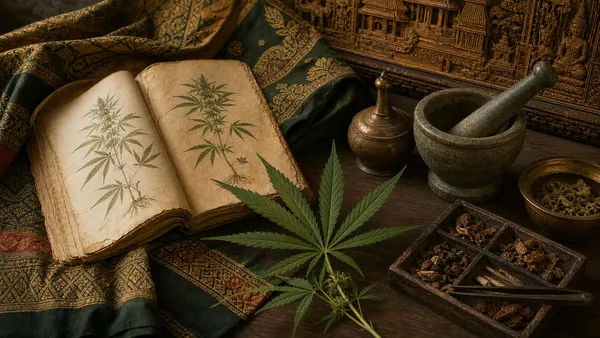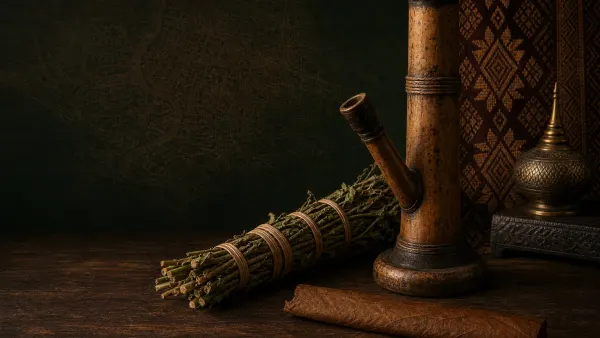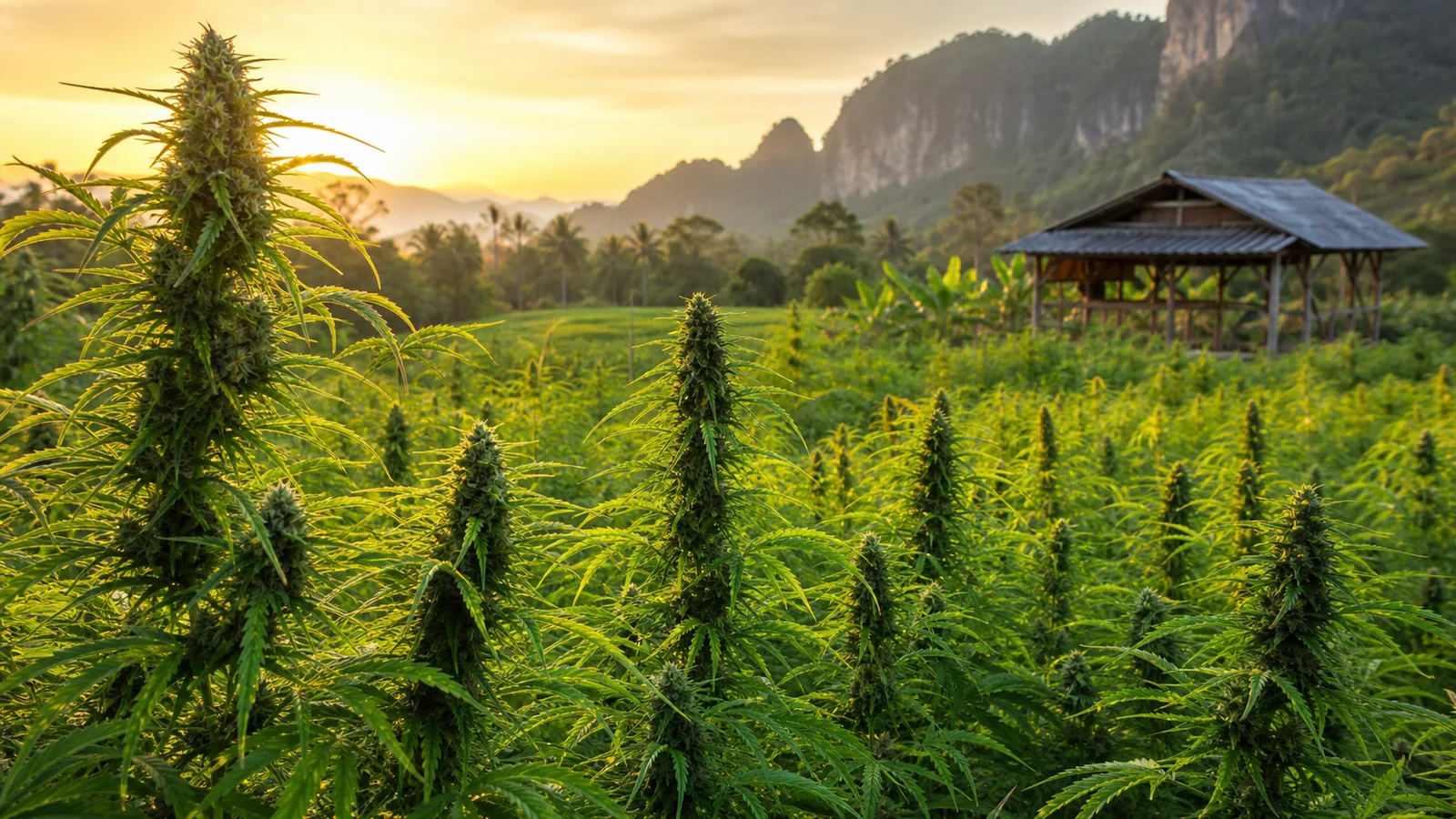
Almost everything on a modern dispensary menu is a hybrid — strains bred from other strains, chasing yield, flavour, or a particular high. Go back far enough up any of those family trees and you reach something older and purer: a landrace. And a surprising number of those roots run through Thailand.
If you want to actually understand Thai weed — not just what's on the shelf this week, but where its character comes from — this is the place to start.
What "landrace" actually means
A landrace is a cannabis variety that developed in one region over a long stretch of time, with little or no deliberate cross-breeding. It adapted to the local climate, soil, and day length until it became genetically stable and distinct — a plant shaped by a place rather than a breeder. Afghan landraces, Colombian, Mexican, South African, Indian… and Thai. They're the raw material the entire hybrid world was built from.
What makes Thai landraces distinct
Thai landraces are classic equatorial sativas, and they behave like it:
- Tall and lanky — long internodes, thin "fingers" on the leaves, plants that want to stretch.
- Long flowering — equatorial sativas typically take far longer to finish than indicas, which is part of why pure ones are rarer in commercial growing.
- Bright, spicy-citrus aromatics — often described as zesty, sometimes with a sharp herbal edge, driven by the terpene profile rather than the indica/sativa label (more on why that matters in our terpenes guide).
- A soaring, cerebral effect — energetic and heady rather than couch-locking. It's the "up" end of the spectrum, which is exactly why it built a reputation.
Effects always vary by person, batch, and how it's grown — but that clear, energetic character is the through-line people mean when they say "Thai sativa."
From landrace to legend — and into everything else
This heritage isn't trivia. Thai landrace genetics were the backbone of Thai stick, the legendary bundled cannabis that built Thailand's name in global cannabis culture through the 1970s. And Thai sativa lines were widely worked into the hybrid era — equatorial sativas like Thai are part of the lineage behind a number of famous modern families. Pin down exact family trees and the history gets murky and contested, so treat specific "X came from Thai" claims with healthy caution — but the broad point holds: Thai genetics travelled, and they left fingerprints.
Are pure Thai landraces still around?
Honestly — pure, unbroken landraces are rare anywhere now, Thailand included. Decades of prohibition, crossbreeding, and imported genetics mean most of what grows commercially today is hybridised. What you'll realistically find is Thai-grown flower with sativa-leaning genetics that carry some of that heritage, rather than a museum-piece pure landrace.
That's not a knock — modern hybrids are more consistent and better suited to indoor growing. It just means "Thai landrace" is more a heritage and a flavour of effect than a guaranteed product category.
Our menu rotates, so we won't promise a specific landrace is on the shelf today. The move is to tell a budtender what you're after — "something energetic and heady, sativa-leaning, with Thai character" — and let the current flower and its terpene profile do the matching. Describe the effect, not a name.
Where to go from here
If this got you curious about what's actually available, our guide to cannabis strains in Thailand covers the practical side, and the terpenes vs indica/sativa piece explains why aroma predicts the experience better than the old labels. For the wider story, see how Bangkok became Asia's cannabis capital.
Or just come ask. Stash BKK Chinatown permanently closed on 1 September 2026, after its final trading day on 31 August. The three current Stash BKK locations are On Nut, Ari and Ekkamai; all are open 24 hours. Current addresses and directions.
FAQ
What is a landrace cannabis strain?
A variety that developed naturally in one region over a long time with little crossbreeding, adapting to the local climate until it became genetically stable and distinct. Landraces are the original genetics that modern hybrids were bred from.
What are Thai landraces known for?
They're pure equatorial sativas — tall, long-flowering plants with bright spicy-citrus aromatics and a soaring, energetic, cerebral effect. That "up", heady character is what people mean by Thai sativa.
Is Thai stick a strain?
Not exactly — Thai stick was a format (cannabis bound onto a stick) built on Thai landrace genetics, famous in the 1970s. The plant behind it was the landrace; the stick was how it was packaged. See our history of bongs, blunts and Thai stick.
Can I still buy pure Thai landrace cannabis?
Pure, unbroken landraces are rare everywhere today. Most commercial flower is hybridised. You're more likely to find Thai-grown, sativa-leaning flower that carries some of the heritage. Ask a budtender by effect and terpene profile rather than chasing a specific landrace name.
Are Thai landraces strong?
They're known for a potent, energetic, cerebral high rather than a heavy body effect — but actual strength depends on the specific batch, how it was grown, and your own tolerance. Start low if you're unsure.